Ladybug Alphabet Bingo: Fun Letter Learning
Engaging Young Learners with Visual Letter Recognition
Teaching the alphabet doesn't have to be a chore. The Ladybug Alphabet Bingo Game transforms early literacy into an interactive experience that keeps children engaged while building foundational reading skills. Designed for PreK through first-grade learners, this game combines visual cues, phonemic awareness, and letter recognition in a way that feels more like play than practice.
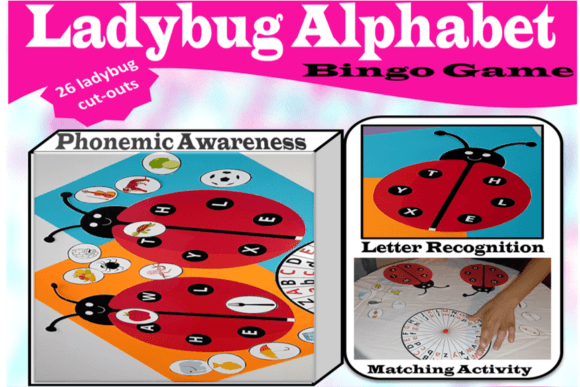
Each ladybug features letters paired with corresponding images, such as an alligator for the letter A. As students match picture cards to the correct letter, they reinforce their understanding of initial sounds and visual letter forms. This multisensory approach helps solidify learning, especially for children who respond well to hands-on activities.
Flexible Use for Diverse Learning Environments
One of the standout features of the Ladybug Alphabet Bingo Game is its adaptability. Whether you're teaching a full class or working one-on-one with a student, the game can be adjusted to fit your needs. In a whole-group setting, the teacher spins an alphabet wheel while students listen for the starting sound and locate the matching letter on their ladybug board.
For younger children or those still building confidence, the number of picture cards can be limited to match the letters on their ladybug. This prevents overwhelm and keeps the focus on mastery of a smaller set before expanding to the full alphabet. Older or more advanced students can handle the full 26-letter set, offering a scalable challenge that grows with their skills.
Supporting Phonemic Awareness Through Play
Phonemic awareness—the ability to hear and manipulate individual sounds in spoken words—is a critical precursor to reading. The Ladybug Alphabet Bingo Game strengthens this skill by prompting students to identify the beginning sound of each pictured item. When they see a picture of an apple, they’re not just looking for the letter A; they’re listening for the /a/ sound at the start of the word.
This subtle but powerful distinction helps children make the connection between spoken language and written symbols. Over time, consistent practice with this game can lead to improved decoding skills, which are essential for early reading success. It's especially effective for auditory learners who benefit from verbal repetition and sound-based activities.
Encouraging Independent Learning and Focus
While the game works well in group settings, it also supports independent learning. Children can play on their own by selecting a ladybug board, spinning the wheel, and finding the matching picture card. This self-directed approach fosters concentration and decision-making skills, as students must rely on their own knowledge without teacher guidance.
For educators and parents looking to incorporate more independent activities into their routine, this game offers a structured yet flexible option. It’s particularly useful in literacy centers, homeschool settings, or as a quiet activity during downtime. The physical act of handling the cards and manipulating the ladybug pieces also supports fine motor development.
How Ladybug Alphabet Bingo Saves Time and Boosts Engagement
Planning engaging literacy activities can be time-consuming, especially when trying to accommodate different learning levels. The Ladybug Alphabet Bingo Game simplifies this process by offering a ready-to-use format that requires minimal preparation. Once the pieces are cut out, the game can be reused across multiple lessons and students.
This durability makes it a practical investment for educators who want to build a bank of reusable classroom resources. Additionally, because the game is visually appealing and interactive, it often holds students' attention longer than traditional worksheets or flashcards. This increased engagement can lead to more consistent practice and better retention of letter-sound relationships.
Perfect for Visual and Kinesthetic Learners
Children learn in different ways, and the Ladybug Alphabet Bingo Game is especially well-suited for visual and kinesthetic learners. The colorful ladybug boards and picture cards provide strong visual cues, while the act of physically handling and matching the cards reinforces learning through movement.
For children who struggle with abstract concepts like letter shapes and sounds, this tactile and visual reinforcement can make all the difference. It also helps reduce frustration by allowing students to see and touch the learning material rather than simply hearing it explained. This combination of visual, auditory, and kinesthetic elements creates a more inclusive learning environment.
Considerations for Best Use
While the Ladybug Alphabet Bingo Game is highly effective, it's important to consider how it fits into a broader literacy curriculum. It works best as a supplemental tool rather than a standalone solution. Pairing it with other activities—such as read-alouds, letter tracing, and phonics songs—creates a more comprehensive learning experience.
Additionally, while the game is designed for younger children, educators may find it useful for older students who need extra support with letter recognition or phonemic awareness. It's also a good fit for ESL learners who benefit from visual aids and repetitive practice in a playful context.
Final Thoughts: A Valuable Addition to Early Literacy Tools
The Ladybug Alphabet Bingo Game stands out as a thoughtfully designed educational resource that blends fun with foundational learning. By combining letter recognition, phonemic awareness, and visual matching in a game format, it supports early literacy in a way that feels natural and engaging for young learners.
Whether used in a classroom, homeschool setting, or at home for extra practice, this game offers a flexible, reusable, and developmentally appropriate way to reinforce key reading skills. Its ability to adapt to different learning levels and styles makes it a versatile tool that educators and parents alike can appreciate.