Evaluating Video Game Composition Notebook Keywords for Amazon KDP Success
For self-publishers on Amazon KDP, the gap between publishing a book and generating sales often lies in metadata optimization rather than cover design alone. While aesthetic appeal captures attention, discoverability drives traffic. This is where specific keyword resources, such as a curated list of Video Game Composition Notebook keywords, become relevant tools for evaluation. These datasets are designed to bridge the disconnect between creative product development and market demand. Understanding the utility, limitations, and strategic application of these keyword lists is essential for publishers looking to validate niches before investing time in manuscript creation.
Defining the Resource and Its Function
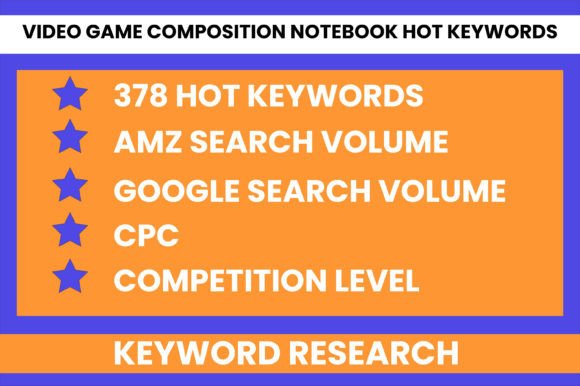
A Video Game Composition Notebook keywords dataset is not merely a list of search terms; it is a structured data analysis tool intended for low-content and medium-content book publishers. Typically delivered in an Excel format, this resource aggregates specific metrics that inform publishing decisions. The primary function is to provide empirical evidence regarding market viability for notebooks themed around video games, music composition, or gaming journals.
The core value proposition of this resource rests on four specific data points usually included in the analysis:
- AMZ Search Volume: Indicates actual customer intent within the Amazon ecosystem, distinguishing between general interest and purchase-ready traffic.
- Google Search Volume: Provides broader context on topic popularity outside of Amazon, helping to identify trending sub-niches.
- CPC (Cost Per Click): Serves as a proxy for commercial value; higher CPC often suggests that advertisers are willing to pay for this traffic, implying stronger monetization potential.
- Competition Level: Estimates the saturation of the niche, allowing publishers to gauge whether they can realistically rank on the first page of search results.
When evaluating this resource, it is important to view it as a validation mechanism. It moves the publisher from guessing what might sell to analyzing what customers are currently searching for but cannot find in sufficient quantity or quality.
Strategic Benefits for Niche Validation
The primary reason publishers seek out specialized keyword files like the Video Game Composition Notebook keywords list is to mitigate risk. In the KDP ecosystem, "good design" is subjective and insufficient without visibility. A beautifully designed notebook will remain invisible if it targets keywords with zero search volume or insurmountable competition.
This dataset facilitates a more objective approach to niche selection. By filtering for high search volume and low competition, publishers can identify "blue ocean" opportunities within the gaming and music intersection. For example, broad terms like "gaming notebook" may be oversaturated, whereas long-tail variations found in a comprehensive 378-keyword dataset might reveal underserved segments such as "retro game music score journal" or "indie developer composition log."
Furthermore, the inclusion of competitive analysis helps set realistic expectations. If the data shows that the top ten results for a specific keyword have thousands of reviews, a new publisher knows that entering that specific sub-niche requires significant marketing spend or superior differentiation. Conversely, finding keywords where top sellers have fewer than fifty reviews indicates a viable entry point. This analytical layer transforms the keyword list from a simple SEO tool into a business intelligence asset.
Tradeoffs and Critical Considerations
While data-driven publishing offers advantages, relying solely on a pre-compiled keyword file involves tradeoffs that must be weighed carefully. One significant consideration is data latency. Search trends in the video game industry move rapidly; a new game release or a viral trend can shift search behavior overnight. A static Excel sheet represents a snapshot in time. Publishers must consider whether the data is recent enough to reflect current market conditions or if supplementary real-time research is necessary.
Another tradeoff is the potential for homogenization. If a popular keyword resource is widely distributed, hundreds of publishers may target the exact same "profitable keywords" simultaneously. This can artificially inflate competition levels shortly after the data is released. Evaluators should assess whether the resource encourages unique interpretation of data or simply prescriptive targeting. Using the data as a starting point for further brainstorming, rather than a definitive checklist, often yields better long-term results.
Additionally, metrics do not account for content quality or brand building. A keyword may have low competition because the existing products are poor quality, which presents an opportunity. However, low competition can also indicate a lack of genuine buyer interest despite search volume. Publishers must exercise critical judgment, cross-referencing keyword data with manual review of bestseller ranks and customer feedback to ensure the demand is transactional rather than merely informational.
Situational Fit: When This Resource Aligns with Goals
The Video Game Composition Notebook keywords dataset is most effective for specific types of publishers and business stages. It is particularly valuable for:
- Data-Novice Publishers: Creators who understand design but lack experience with SEO tools or data interpretation benefit from pre-analyzed metrics. The structure removes the learning curve associated with raw keyword research software.
- Niche Expanders: Publishers already established in the gaming or music niche who need to find adjacent sub-categories. The breadth of 378 keywords allows for lateral expansion without starting research from scratch.
- Volume-Based Strategists: Those operating on a model of publishing multiple titles to capture aggregate tail-end traffic. Efficient validation is crucial for this model, and batch-processing keyword data saves significant time compared to individual product research.
In these scenarios, the resource acts as an accelerator, reducing the time between ideation and publication while increasing the statistical probability of discoverability.
When Alternatives May Be Preferable
Despite its utility, this type of keyword resource is not universally applicable. Publishers focused on high-content books, such as novels or comprehensive guides on game audio engineering, may find low-content keyword data misaligned with their needs. High-content discovery relies more on author authority, editorial reviews, and category placement than on backend keyword stuffing.
Furthermore, publishers with advanced SEO skills may prefer dynamic tools over static spreadsheets. Platforms like Helium 10, Publisher Rocket, or Book Bolt offer real-time data updates and historical trend tracking that a fixed Excel file cannot provide. For professionals treating KDP as a full-time enterprise, the subscription cost of live software often justifies itself through superior accuracy and ongoing monitoring capabilities.
Finally, those building a distinct brand identity rather than chasing trends may find keyword-first publishing restrictive. If the goal is to create a signature series recognized for unique artistic style, forcing content into pre-validated keyword molds can dilute brand coherence. In such cases, keywords should support the creative vision, not dictate it.
Making the Final Decision
Evaluating the Video Game Composition Notebook keywords resource requires balancing efficiency against flexibility. For publishers struggling with zero sales despite good design, the issue is frequently metadata. This dataset addresses that specific pain point by providing validated entry points into the market. However, success depends on how the data is applied.
Potential users should ask three questions before utilizing this resource: Does my current bottleneck involve discoverability rather than product quality? Am I willing to cross-reference this static data with live market observation? Do I have a strategy to differentiate my product even if others are using the same keywords? If the answers align with a data-informed, iterative publishing strategy, this keyword analysis serves as a practical foundation. Ultimately, the resource is a compass, not a map; it points toward probable opportunity, but the publisher must still navigate the terrain of execution, design quality, and customer satisfaction to convert search volume into sustainable sales.